Redesigning playscapes with children and youth
Kulturno okoljsko društvo Pazi!park
Location: Elementary School Karel Destovnik Kajuh, Ljubljana, Slovenia
Participants: children aged 7–12 from various ethnic backgrounds, facing social challenges due to lower family income
Key words: co-design, schoolyard, play elements, multifunctional, inclusive, greening, community
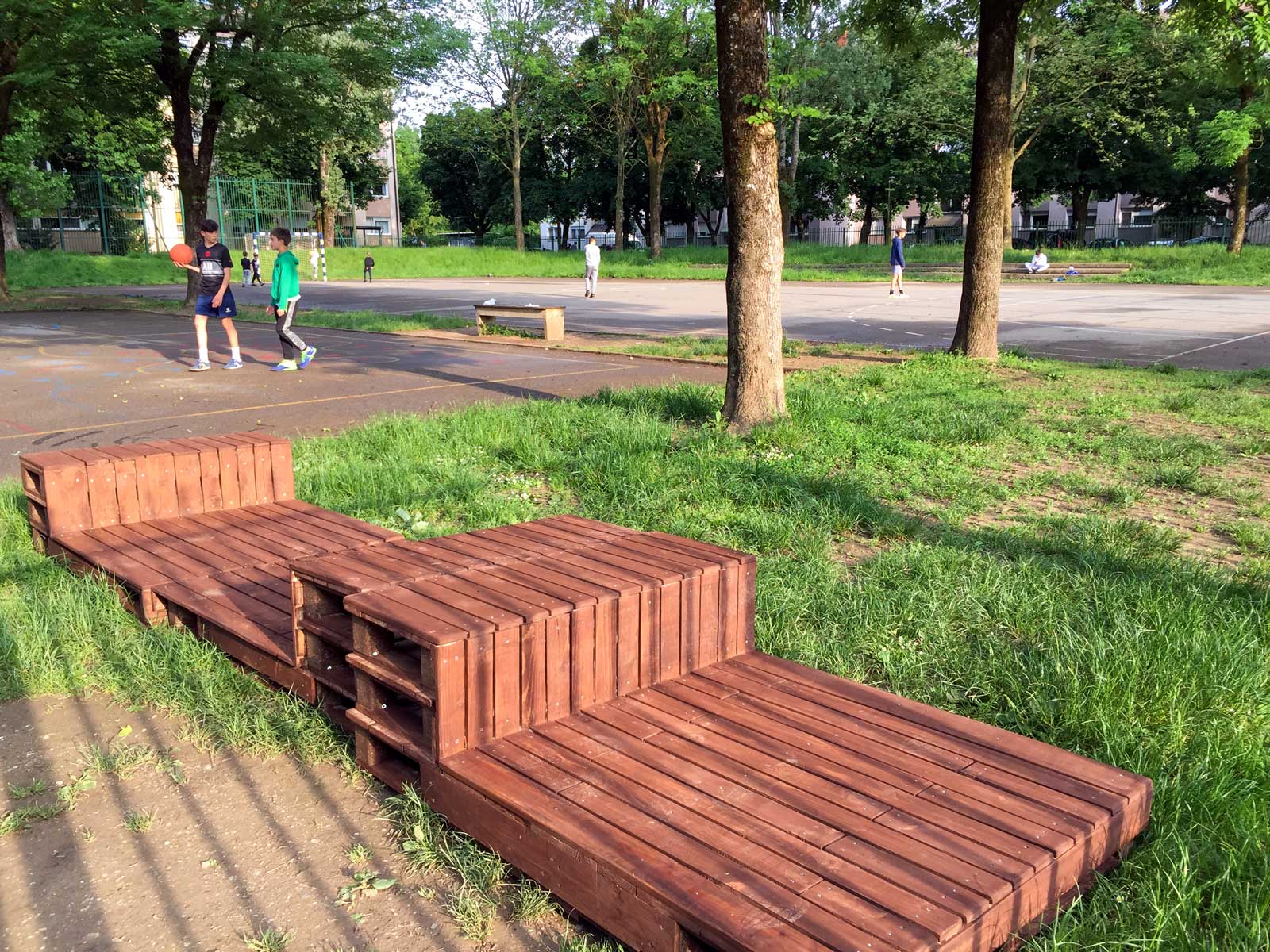
We had the incredible opportunity to collaborate with school kids on a co-designing and co-creating project aimed at the revitalization of their schoolyard. By analyzing the space and its use, we gathered suggestions from the students, teachers, and school management. It became evident that the schoolyard was primarily used for sports activities, lacking play equipment, benches, or designated spots for kids to sit and socialize at.
After discussion and brainstorming, we prepared a masterplan for the complete renovation of the area. The plan was structured with a phase-by-phase approach, taking into consideration available financial means, necessary permits and estimated construction time. The proposal outlined specific interventions to be implemented as part of RE:PLAY. We agreed that the schoolyard needed areas where kids could comfortably sit and engage in social activities, while also providing play opportunities for younger children. We proposed three interventions to improve the space and make it more inclusive and engaging.
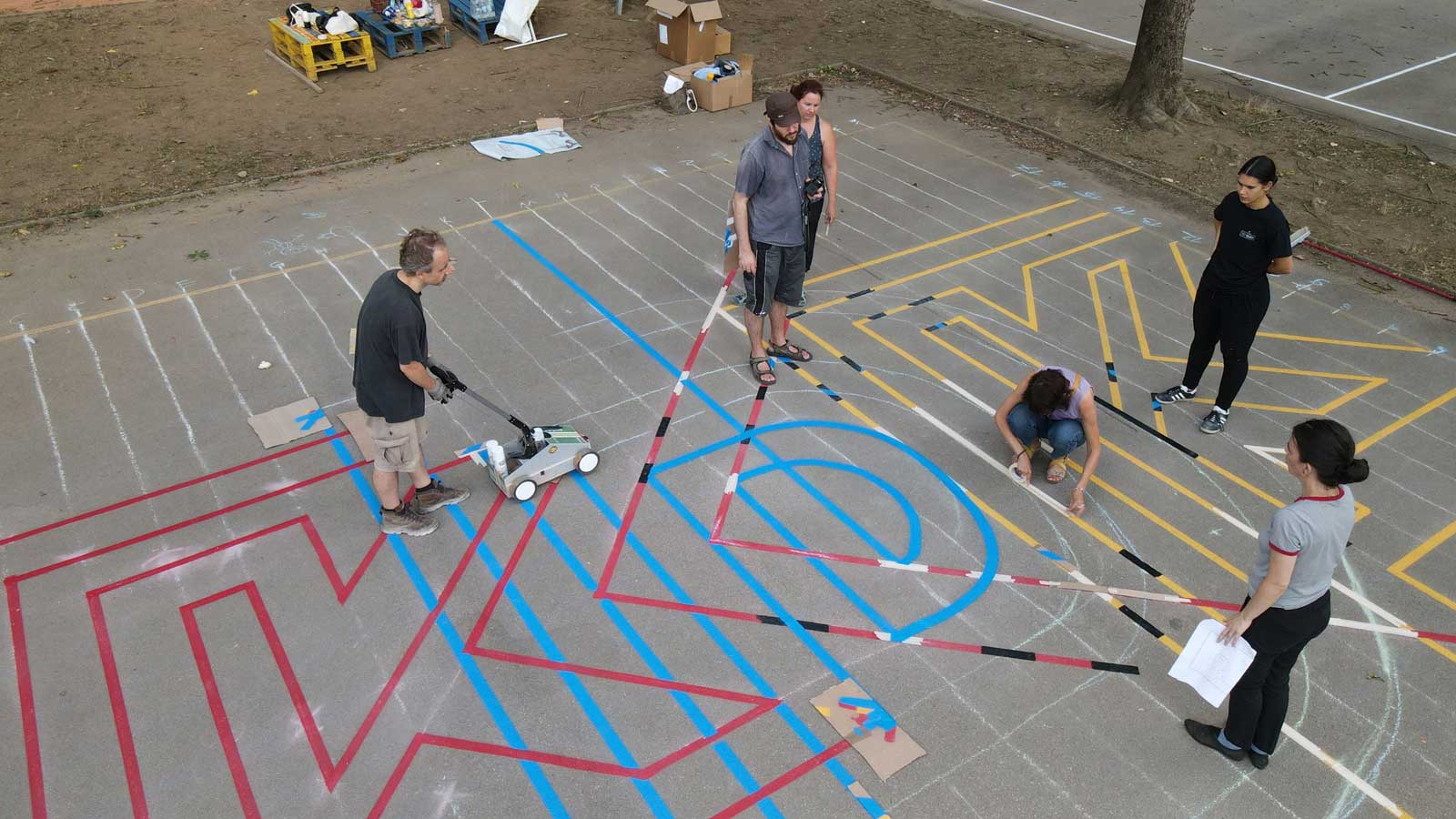
The sports field used for informal ball games underwent a painting transformation in collaboration with the Youth Centre Moste and a local parents’ initiative. Over the course of two afternoons, a painting workshop took place. Layout was designed based on teachers’ proposals for floor games and students’ wishes for a labyrinth.
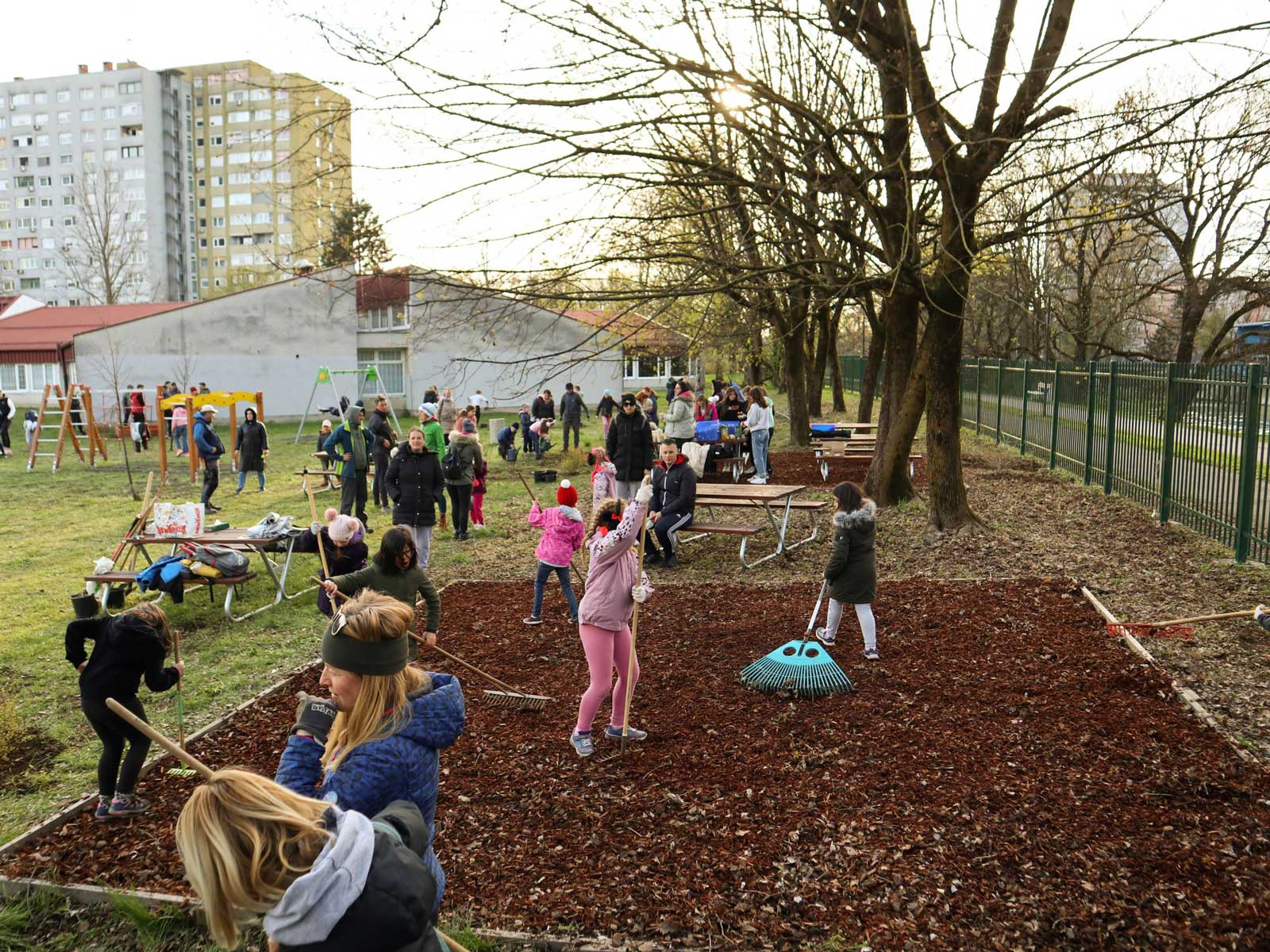
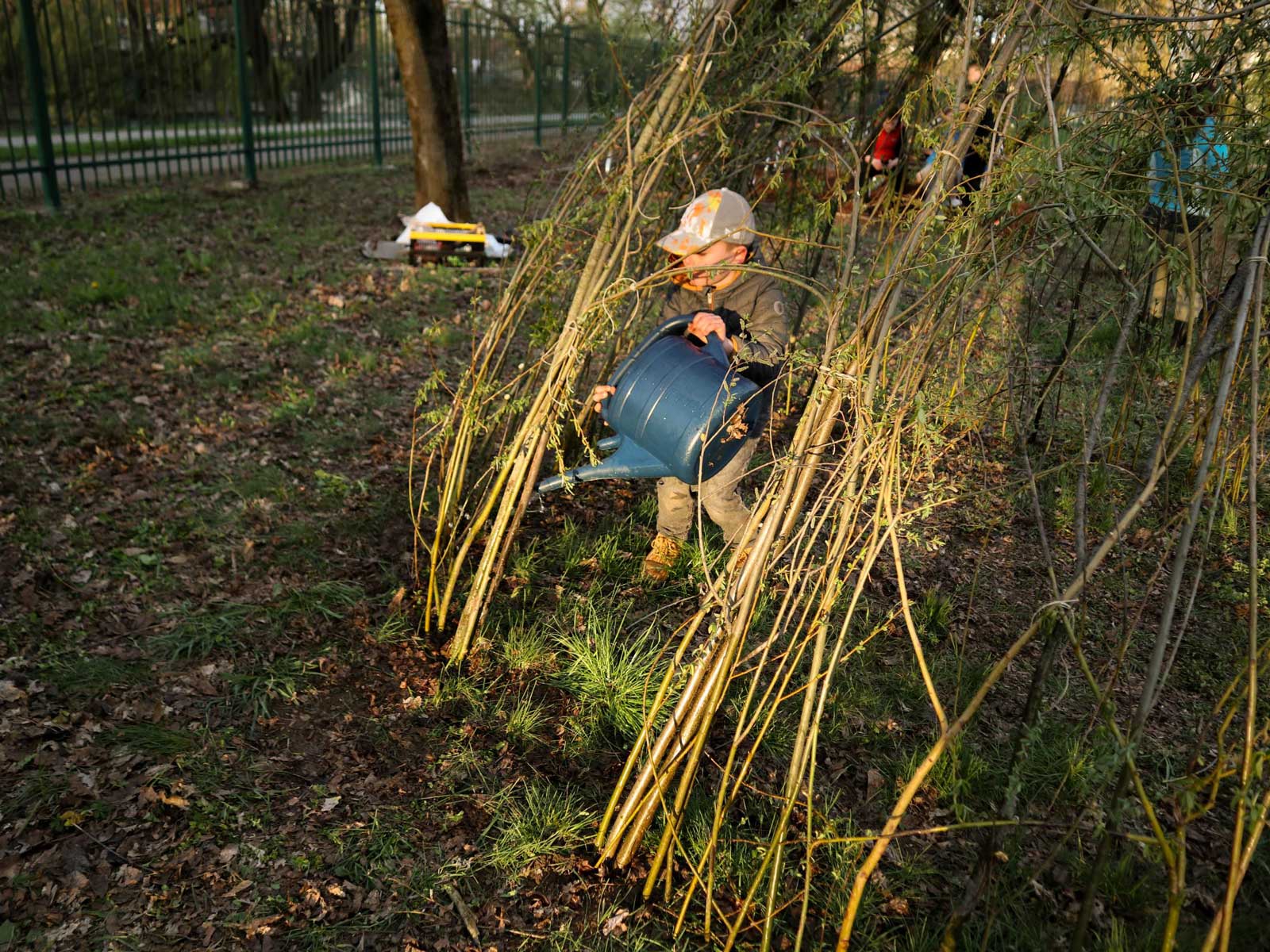
To further enrich the environment, we embarked on a greening initiative. We planted vegetation along the fences and between the play area and outdoor classroom creating distinct areas with different functions and uses. Careful consideration was given to the selection of plants to enhance biodiversity (attract birds and butterflies), ensure the aesthetics (various shapes and colors of bark, leaves, flowers and fruit) and year-round educational and play value.
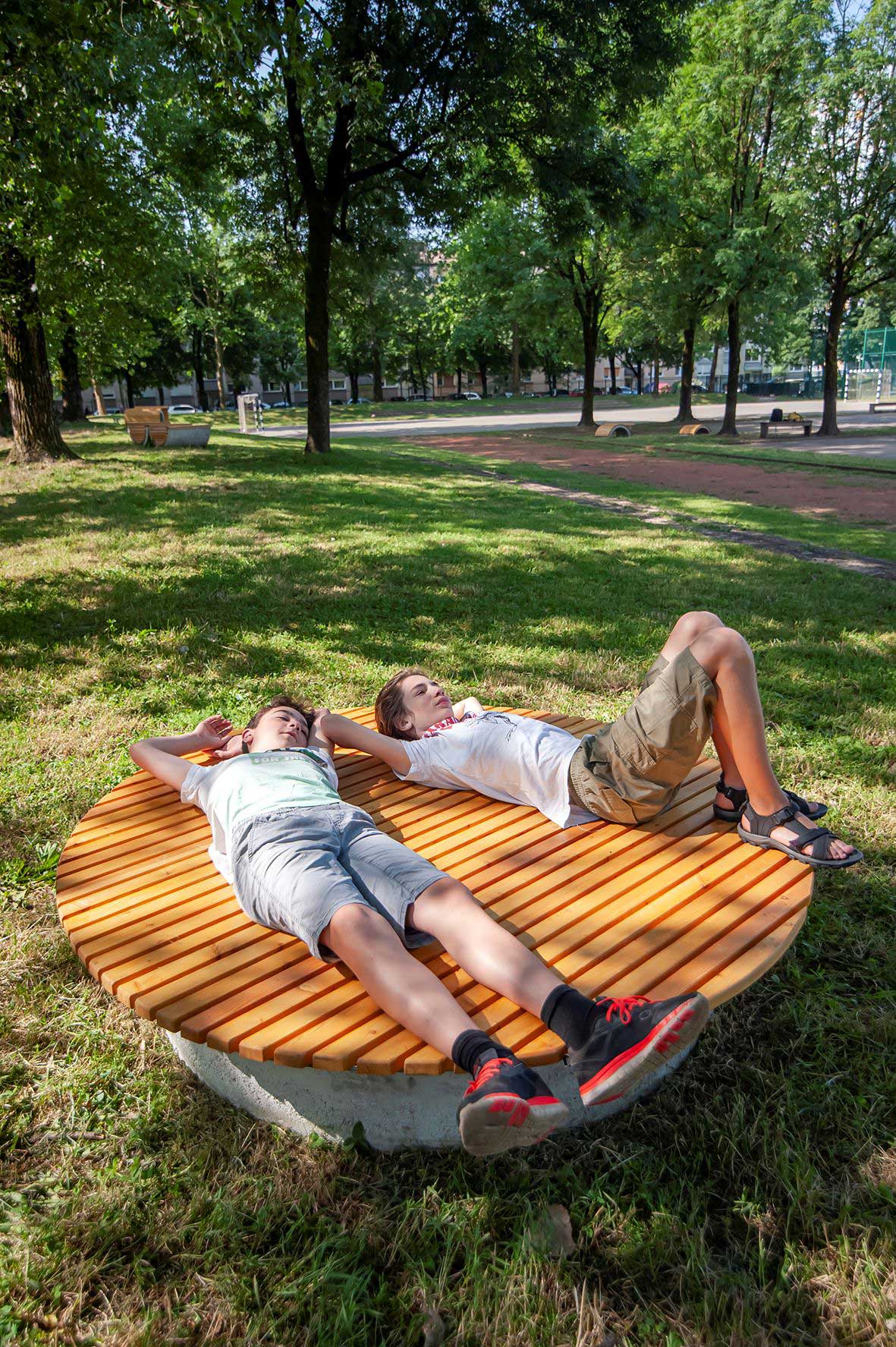
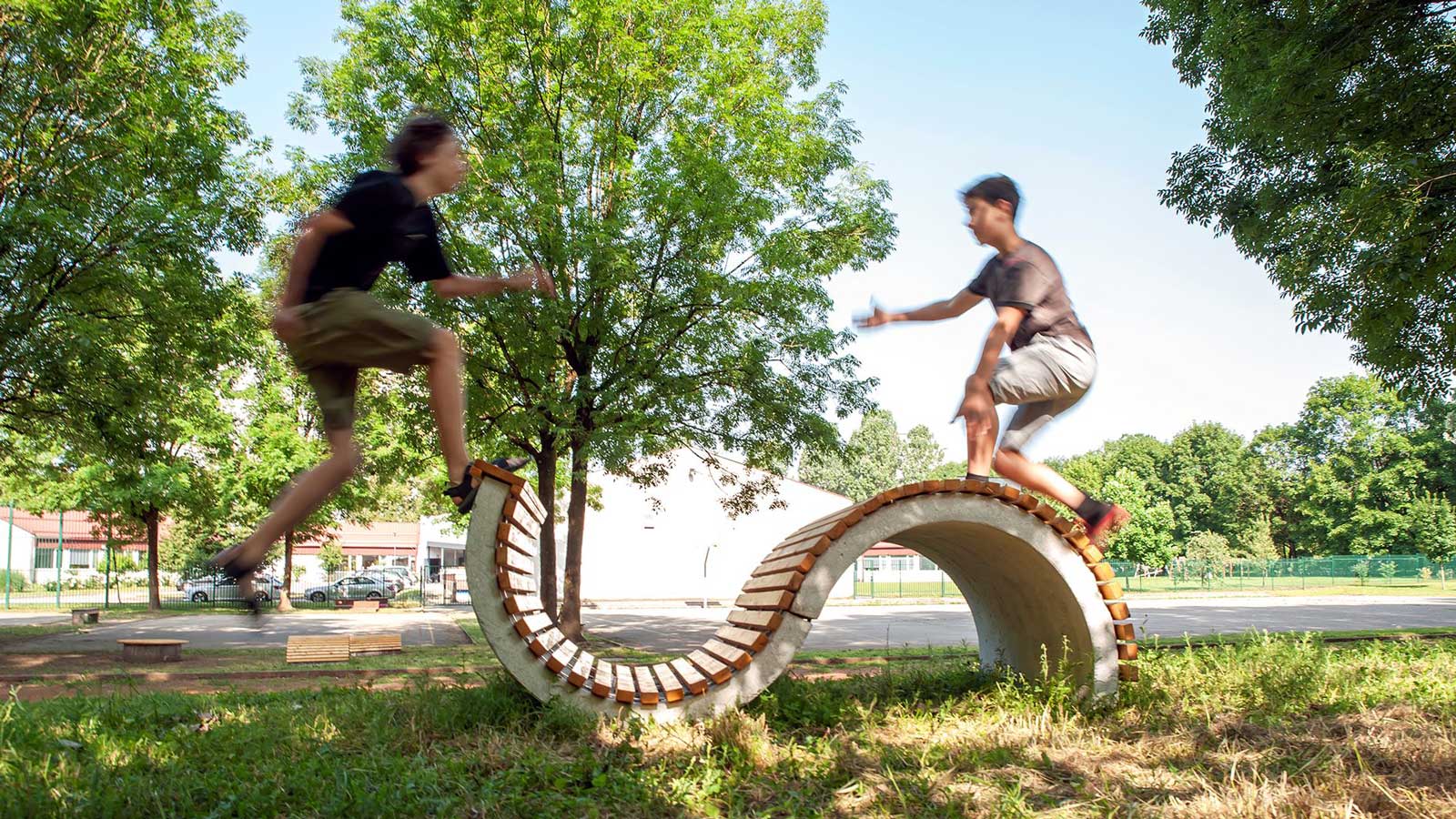
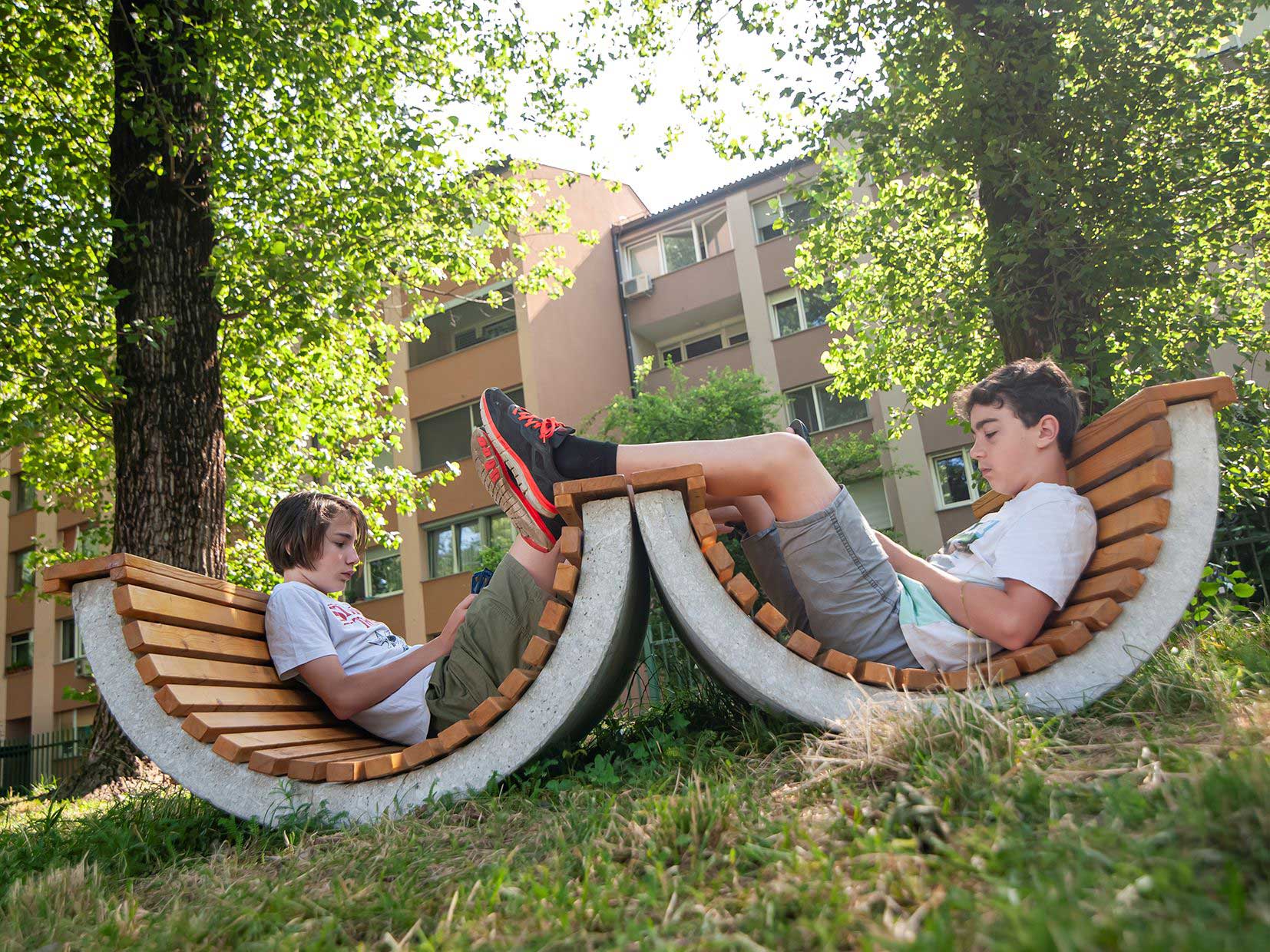
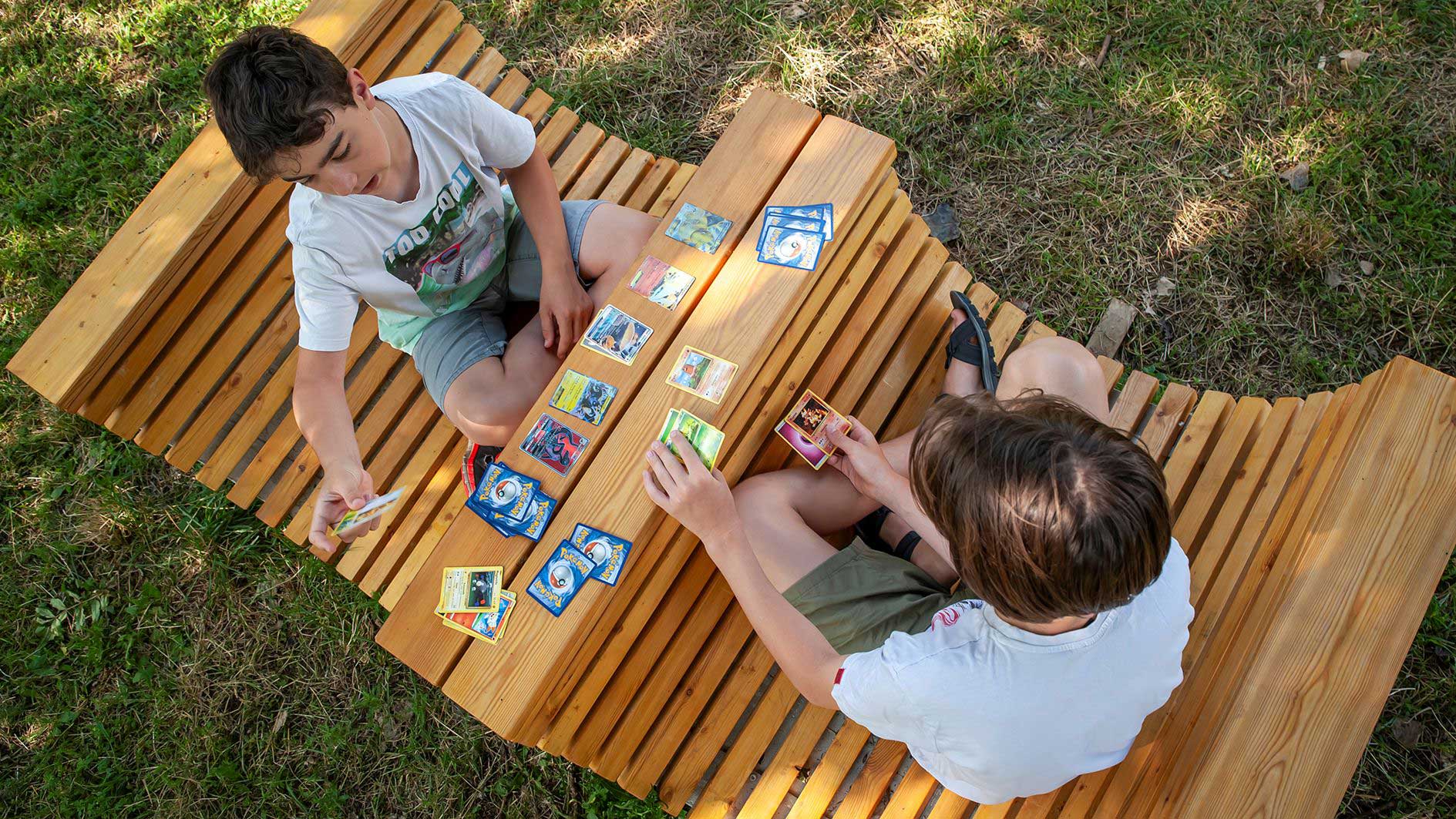
The third proposal involved the development of a new versatile element for sitting, playing, outdoor classes, and as a small stage. In addition to the multifunctionality, we took into account vandalism and used resistant materials and sturdy form. The students participated in the design process, contributing their creative ideas and preferences.
Throughout the implementation of these proposals, the project progressed in stages, allowing everyone involved to contribute actively. Students, guided by parents, teachers and mentors, took pride in their schoolyard transformation, nurturing a sense of ownership and responsibility. The process not only improved the physical aspects of the space but also fostered a stronger sense of community and camaraderie among the students.
Find out more about